
Artificial Intelligence (AI) is a trend that is constantly growing
Thanks to its ability to perform tasks, it is becoming increasingly integrated into society through its neural networks, which power virtual assistants, make online shopping recommendations, recognize people in photographs, prevent fraudulent banking transactions, transcribe voice messages, and so on.
It is a constant challenge for scientists to advance this combination of algorithms to the next level: merging artificial intelligence and robotics to create an intelligence capable of making decisions and controlling a physical body, with the goal of building machines that possess capabilities similar to those of a human being.
The goal is for robots to be able to make decisions based on predefined parameters.
Advantages:
Artificial Intelligence and robotics can exist independently of one another, since a robot does not necessarily have to operate based on AI—it can follow basic, pre-programmed commands—and AI can be implemented through programs, applications, or computer systems without the involvement of robotics; but when the two are integrated, a myriad of real possibilities and advantages become apparent.
On the one hand, there is the ability to optimize its own operations.
As of today, the work of these machines must still be supervised by humans, but the possibility of total autonomy exists.
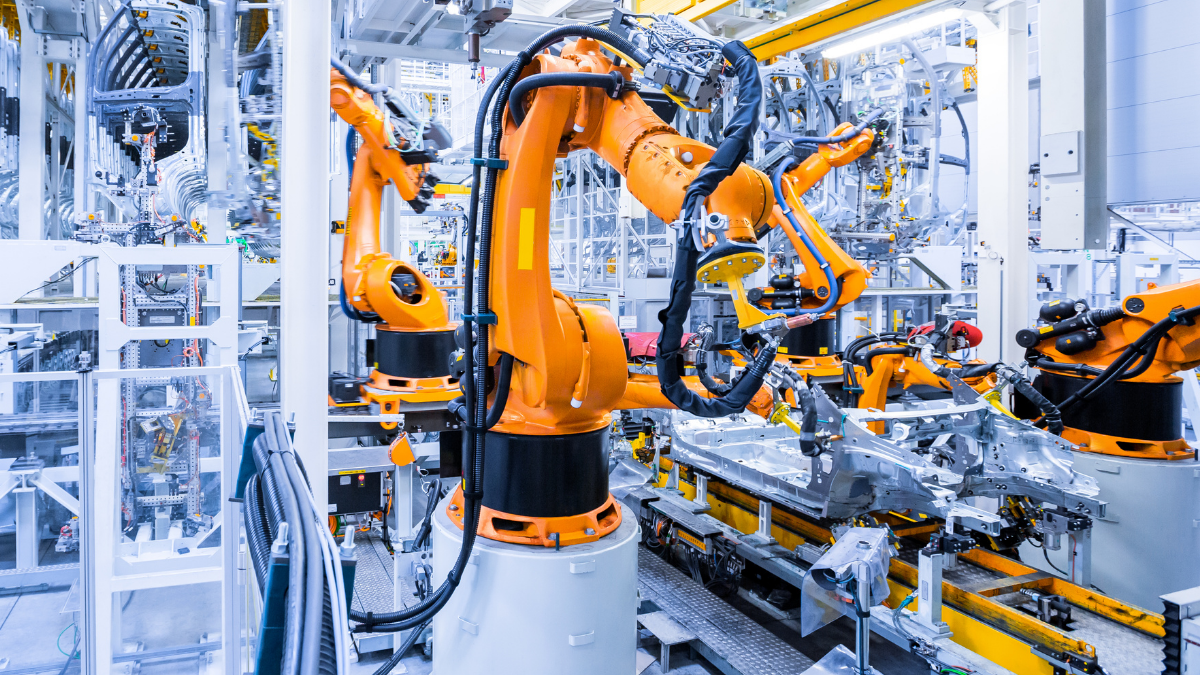
AI is also capable of analyzing data to diagnose and predict errors. When combined with robotics, this can have numerous applications. For example, in the predictive maintenance of systems or assembly lines.
Basically, robots are capable of performing tasks that humans cannot do or that involve a high level of risk: a robot that can enter a structure on the verge of collapse, a burning building, or a highly contaminated environment, and determine from the inside what steps need to be taken to minimize the danger.
Current Applications:
Assembly lines: Manufacturing is one of the sectors where robotics combined with artificial intelligence has been in use the longest. For example, in automobile factories, robots perform automated tasks related to assembly.
Automated logistics center: In an automated warehouse, robots operate autonomously so that, for example, in the case of a large supermarket’s warehouse, they can depalletize shipments from each manufacturer and organize orders for each store, optimizing space.
Machinery Monitoring: Proper maintenance of industrial machinery is one of the keys to optimizing results. AI-powered robots can perform this task to improve equipment efficiency and productivity.
Packaging: Robots perform repetitive tasks to package products, but thanks to their sensors and AI, they are also able to make decisions based on the information they gather.
Driverless Transportation: Drones and driverless vehicles can be used in a wide variety of situations. For example, in the event of a natural disaster, they can be used to transport medicine to inaccessible locations or to transport goods.